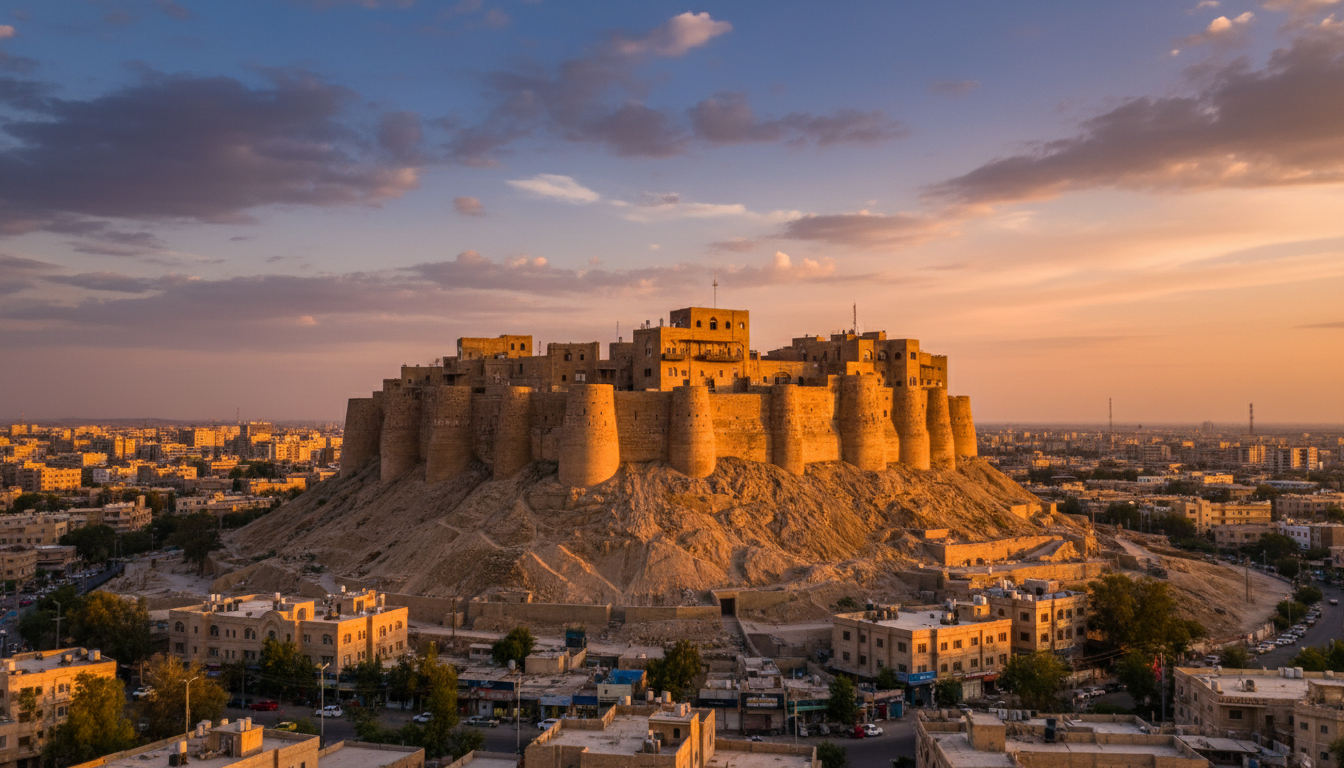
Mesopotamia: The Birthplace of Human Civilization
Mesopotamia, derived from the Greek words meaning "between rivers," refers to the region between the Tigris and Euphrates rivers in what is now Iraq. This ancient land witnessed the emergence of the world's first civilizations, fundamental innovations, and lasting cultural legacies that continue to shape human society. Beginning around 10,000 BCE with the Neolithic period, Mesopotamia transformed from hunter-gatherer communities into complex urban societies, establishing patterns of agriculture, trade, governance, and artistic expression that became the foundation of Western civilization.
The Sumerians, who flourished in southern Mesopotamia around 3500 BCE, achieved remarkable breakthroughs. They invented cuneiform, the world's first written language, revolutionizing human communication and record-keeping. They developed sophisticated irrigation systems, built the first cities including Uruk and Ur, and created monumental architecture. Sumerian contributions extended to mathematics, astronomy, law codes, and literature, including the Epic of Gilgamesh, one of humanity's oldest literary works. The Akkadian Empire, established by Sargon the Great around 2334 BCE, subsequently unified Mesopotamia, introducing Semitic language and governance structures that influenced the region for centuries.
The Babylonian civilization rose to prominence under King Hammurabi (1792-1750 BCE), who created one of history's first comprehensive legal codes, the Code of Hammurabi, establishing principles of justice still referenced today. Babylonian achievements included advanced mathematics, including the development of a base-60 numerical system still reflected in our measurement of time and angles. The Assyrian Empire (2600-609 BCE) became one of history's most powerful military states, known for exceptional organizational abilities, architectural grandeur, and extensive libraries. The Library of Ashurbanipal at Nineveh preserved thousands of cuneiform tablets, providing invaluable insight into Mesopotamian thought, religion, science, and daily life.
Mesopotamian innovations fundamentally transformed human civilization. Beyond writing and mathematics, they developed the wheel, bronze metallurgy, agriculture-based economy, organized religion, and centralized government systems. Their irrigation technology enabled population growth and urban development. Mesopotamian law established concepts of contracts, property rights, and justice that became foundational to legal systems worldwide. Their astronomical observations, recorded in clay tablets, influenced later Greek and Islamic science. Today, modern Iraq preserves this incomparable heritage through archaeological sites like Babylon, Uruk, and Lagash, as well as world-class museums housing artifacts that testify to the brilliance and enduring influence of ancient Mesopotamian civilization on global human development.